Working safely and diligently to protect the lives and property of the people of Huntington.

THE FALLEN
“Greater love has no one than this, that a man lay down his life for his friends”
-
Firefighter John Wright – March 27th, 1901
On the morning of March 27, 1901, a devastating fire broke out at the Sehon, Blake & Stevenson wholesale grocery building in Huntington, West Virginia. Contemporary newspaper accounts reported that the blaze consumed the large grocery warehouse, causing an estimated $100,000 in property loss (with around $50–60k insured). Amid the firefighting efforts, Huntington fireman John Wright was killed in the line of duty, making the ultimate sacrifice while battling the flames. Another firefighter, Will Sturgeon, was seriously injured in the same incident. The tragedy was widely covered in regional newspapers – for example, The Jackson Argus and The True Citizen printed brief dispatches in late March 1901 describing Fireman Wright’s death in the conflagration. These contemporaneous reports provide primary documentation of the event, confirming the date, location, and firefighting personnel casualties.
-
Firefighter E. C. Aldridge – March 9th, 1931
On March 9, 1931, Edgar C. Aldridge lost his life in the line of duty. That day, Aldridge was critically injured while combating a fire in Huntington and succumbed to his injuries. Newspaper accounts described the incident, noting that he sustained severe trauma at the fire scene, likely from a collapse or explosion. He died that day at the age of 48. His death was the first Huntington firefighter line-of-duty death in 30 years.

-
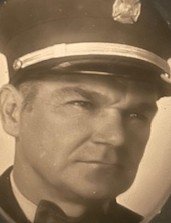
Captain George W. Gerlach – January 1st, 1937
On the night of December 31, 1936 (New Year’s Eve), Captain Gerlach was critically injured in the line of duty. While responding to an alarm, the fire truck he was aboard collided with an automobile at the intersection of Third Avenue and 21st Street in Huntington. The violent crash caused severe injuries to Gerlach. He was rushed for medical treatment, but unfortunately he succumbed to his injuries a few days later. Captain Gerlach died on Monday afternoon, January 4, 1937, as a direct result of the accident. He was 62 years old at the time of his death.
-
Firefighter Chancey Knight – January 30th, 1940
On January 30, 1940, Firefighter Knight lost his life in the line of duty. Contemporary accounts indicate that Knight was fatally injured while battling a significant fire in Huntington. The specific building or location of the fire is not named in surviving summaries, but it was a serious incident that claimed his life. Historical accounts suggest that Knight may have been killed when a roof or structure collapsed during the fire. Despite rescue efforts, his injuries proved fatal.

-
Firefighter Jesse Hensley – April 4th, 1945
Shortly before midnight on April 7, 1945, a fast-moving fire broke out at Arena Gardens, a large wooden public arena in Huntington, West Virginia. The blaze swept rapidly through the wooden structure. Six fire companies responded and battled the flames, but after roughly 30 minutes on scene firefighters realized there was no hope of saving the structure. Arena Gardens was completely destroyed by the fire, which lit up the night sky. During the firefight, tragedy struck when the roof of the burning building suddenly collapsed. Huntington Fire Department Lieutenant Jess (Jesse) Hensley was caught in the collapse and suffered fatal injuries. Three other firefighters inside narrowly escaped. Hensley was the only fatality in the incident.

-
Lieutenant Leonard Hartz – May 22nd, 1948

-
Fireman William Ernest Booth – May 22nd, 1948
On May 22, 1948, three boys—John Claypool Jr. (12), Phillip Claypool (9), and Hubert James Borders (12)—went missing on the Ohio River in a small johnboat. Responding to the emergency, Lt. Leonard Hartz and Fireman William Booth launched a rescue boat in hopes of saving them. Tragically, both boats were pulled under a moored barge by swift currents. All five—Booth, Hartz, and the three boys—drowned. The incident occurred on Hartz’s 39th birthday, making the sacrifice all the more tragic. Booth was 38 years old. Their death marked one of the most tragic days in Huntington Fire Department history.
Both Lieutenant Hartz and Fireman Booth received full honors in a departmental funeral, and his name is inscribed on the Huntington Fallen Firefighters Memorial. A bronze plaque honors both Booth and Hartz for their ultimate sacrifice. In 2014, the Huntington Fire Department named its 36-foot fireboat the ‘Hartz-Booth’ in their memory. The vessel serves river rescue operations and is a living tribute to the bravery of the two men who perished attempting to save others.

-
Firefighter Emmett V. Wheeler – February 26th, 1952
Unlike his colleagues, Emmett Wheeler did not die in a fire or accident, but from what appears to have been a sudden medical emergency while on duty. Accounts have it as he collapsed while walking to the apparatus to answer an alarm. His death certificate and contemporary records indicate he died of natural causes, suggesting he suffered a fatal health episode—such as a heart attack—while performing his duties.

-
Captain John M. Cannon – June 20th, 1971
On June 20, 1971, Captain John Cannon lost his life in the line of duty while battling a major industrial fire at the Standard Ultramarine & Color Co. (then operated by Chemetron) in Huntington. What began as a small fire escalated rapidly following a series of powerful explosions. The fire raged for over six hours, injuring at least 17 firefighters and 20 people overall. Captain Cannon was inside the burning structure when the explosions occurred. He suffered a fatal heart attack while helping to control the blaze. Despite rescue efforts by fellow firefighters, he did not survive.